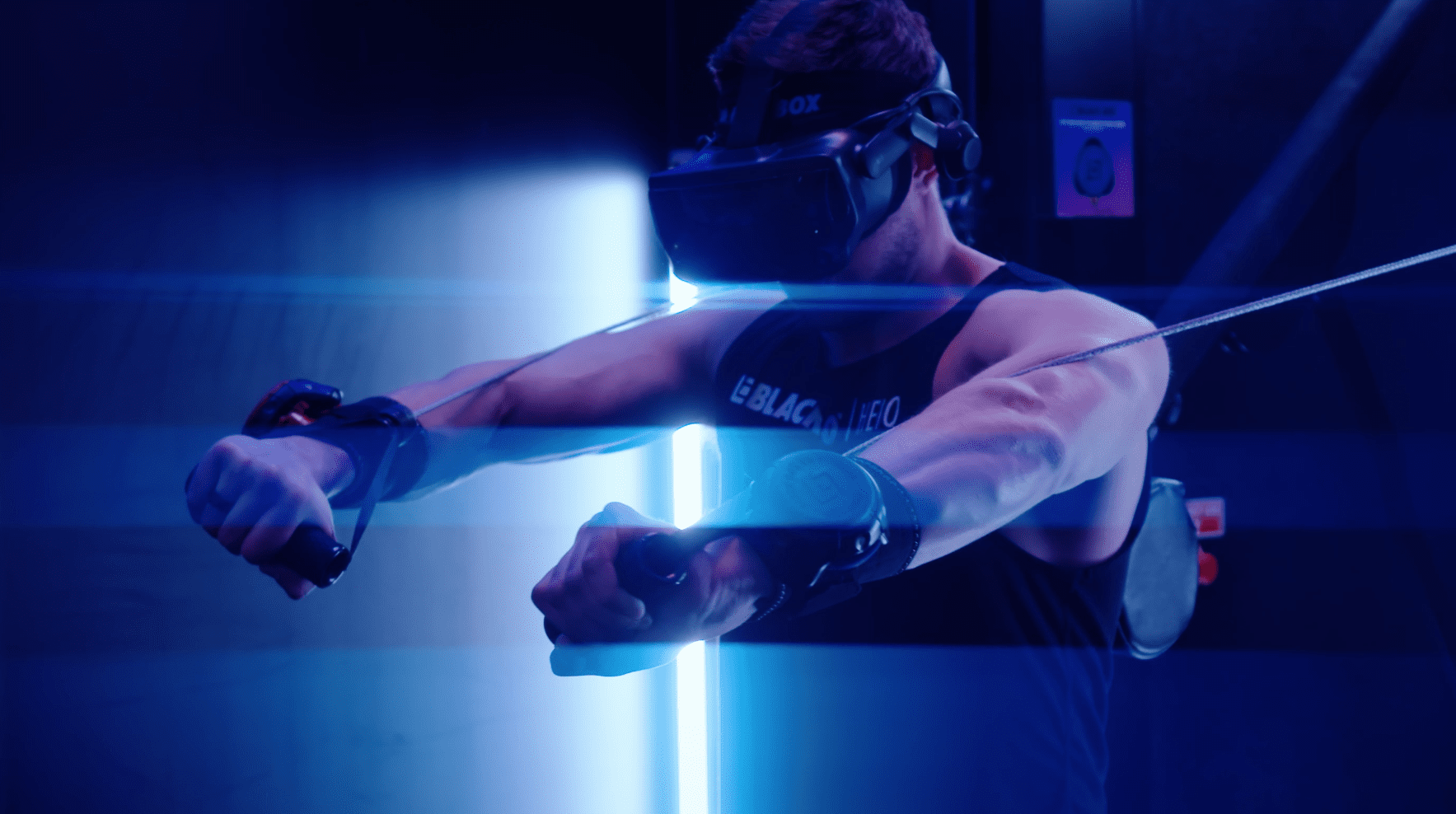
6 new research studies confirm what we’ve been building at Black Box VR
We started Black Box VR because we believed something bold: that virtual reality could make exercise more effective, more engaging, and more accessible than anything that came before it! That wasn’t just a hunch — it was grounded in early science. But science moves fast, and a wave of brand-new research is now backing up that vision with hard data.
We dug into six exciting recent studies. Here’s what they found — and what it means for you.
1. VR Exercise Nearly Doubles Adherence — and Crushes Depression
Zhang et al., JMIR, 2025 — Randomized Controlled Trial, 114 participants
Researchers split people with mild-to-moderate depression into three groups: regular stationary cycling, VR cycling at moderate intensity, and VR cycling at high intensity. After 12 weeks, the VR groups saw depression response rates of 84–92%, compared to just 58% for the non-VR group. But here’s the kicker: adherence in the VR group was 81% versus just 49% without VR. People didn’t just get better results — they actually showed up.
- Your takeaway: VR doesn’t just make workouts more fun. It makes people stick with them — and that consistency is what drives real results, whether your goal is mental health, physical fitness, or both.

2. Exergames Are the #1 Exercise Type for Brain Health
Singh et al., British Journal of Sports Medicine, 2025 — 258,000+ participants across 2,700+ trials
This is the largest analysis of exercise and brain function ever conducted. Researchers reviewed 133 systematic reviews covering over a quarter-million people and found that exercise significantly improves cognition, memory, and executive function across all ages. The standout finding? Exergames — exercise combined with interactive gaming elements — produced the largest cognitive benefits of any exercise type, outperforming running, swimming, resistance training, and everything else studied.
- Your takeaway: When you work out at Black Box VR, you’re not just building muscle — you’re training your brain with the single most effective exercise modality science has identified for cognitive performance.
3. You Don’t Have to Destroy Yourself to Get Results
Martikainen et al., Journal of Science in Sport & Exercise, 2025 — RCT, trained lifters
There’s a persistent myth in fitness that you need to train to failure on every set to make progress. This study put that to the test with experienced lifters over 10 weeks and found that varying your intensity — sometimes pushing hard, sometimes backing off — produced the same strength and muscle gains as grinding to failure every single session. The bonus? The varied-intensity group reported lower perceived effort. Same gains, less suffering.
- Your takeaway: This is exactly how Black Box VR designs workouts — smart intensity variation that keeps you progressing without burning you out. Science says you can train hard and train smart at the same time.
4. VR Doesn’t Just Train Your Body — It Fuels Your Motivation
Maggio et al., Scientific Reports, 2025 — RCT, 54 chronic stroke patients
Researchers compared VR-based training to conventional rehab in stroke patients over 8 weeks. Both groups improved cognitively. But only the VR group showed significant improvements in depression, anxiety, and — critically — motivation. VR simultaneously improved cognitive function, emotional wellbeing, and the internal drive to keep going. That’s a trifecta that traditional exercise simply didn’t match.
- Your takeaway: Motivation is the hardest part of fitness. VR doesn’t just give you results — it makes you want to come back. That’s the secret weapon behind every Black Box VR session.
5. Exergames Can Literally Grow Your Brain
Manser et al., Alzheimer’s Research & Therapy, 2025 — First-of-its-kind RCT
In what may be the most remarkable finding in recent exercise science, researchers showed for the first time that exergame training actually increased brain volume in patients with early-stage Alzheimer’s disease. After 12 weeks, participants showed measurable growth in the hippocampus (the brain’s memory center) and the thalamus — and those structural changes correlated directly with improvements in memory performance. This is the first randomized controlled trial ever to demonstrate that exergames can positively reshape brain structure in neurodegenerative disease.
- Your takeaway: VR fitness isn’t just about looking good or feeling good. The emerging science suggests it could be genuinely neuroprotective — helping preserve and even grow your brain as you age. That’s a reason to work out that goes far beyond the mirror.
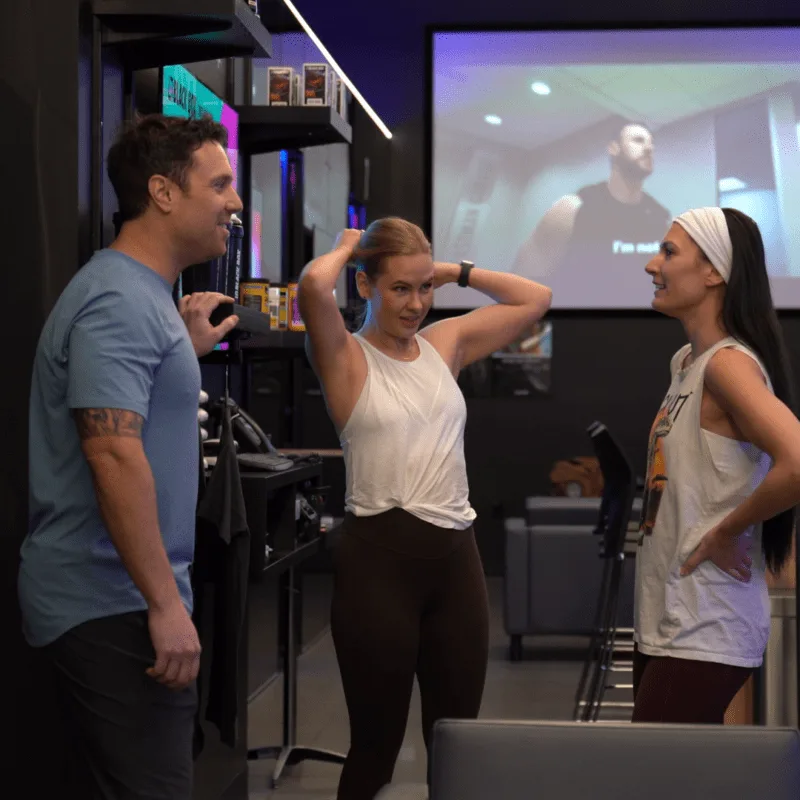
6. VR Can Read Your Emotions — and Adapt in Real Time
Potts et al., CHI ’24 (ACM Conference on Human Factors), 2024 — 72 participants
This study explored whether VR exercise environments could detect and influence a user’s emotional state during a workout. Using physiological sensors — including eye tracking already built into modern VR headsets — researchers found they could reliably classify how someone was feeling during exercise. They also confirmed that carefully designed virtual environments consistently shifted users into target emotional states, whether that was energized, calm, focused, or happy.
- Your takeaway: Imagine a workout that knows when you need a boost and adapts the environment to energize you — or senses that you’re stressed and shifts into recovery mode. That’s the future of VR fitness, and the science to make it happen is already here.
The Bottom Line
Six studies. Hundreds of thousands of participants. One clear message: combining exercise with immersive virtual reality and game mechanics produces better physical results, stronger cognitive benefits, higher motivation, greater adherence, and potentially even structural changes in the brain.
At Black Box VR, we’re not just building a gym — we’re building the most scientifically validated way to train your body and brain at the same time. The research is catching up to what our members already know: once you experience VR fitness, there’s no going back.
Your first battle is on me. Book your FREE demo today. It’s time to change the game.
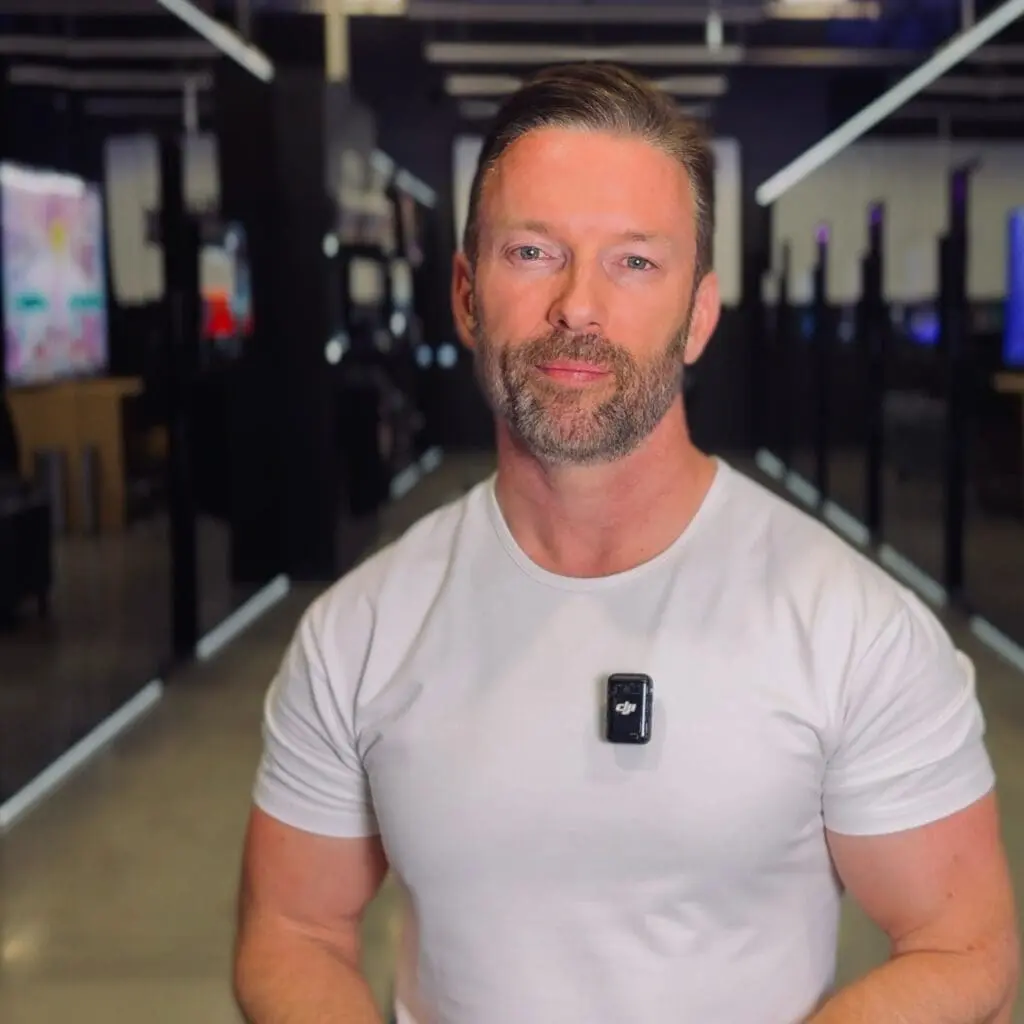
Ryan DeLuca is the CEO and Co-Founder of Black Box VR, the world’s first virtual reality fitness experience. Previously, he founded Bodybuilding.com and grew it to become the most visited fitness site in the world with nearly $500 million in annual revenue before stepping down as CEO in 2015.
Ready to dive in? Let’s make fitness your new favorite game. Welcome to the future – welcome to Black Box VR!
About Black Box VR
Black Box VR is the world’s first virtual reality esport that combines resistance training, HIIT cardio, and intense gaming to deliver a science-backed workout experience. In our luxurious gym locations, members are able to build muscle, lose fat, and get fit while playing an addictive game.
Have questions? Ask MAIA, our AI chatbot!