Here’s a question nobody in the fitness industry wants to sit with for too long:
Why does a $100 billion industry have an 80% failure rate?
Not failure as in “the businesses aren’t profitable.” Failure as in the people. Roughly 80% of adults don’t exercise consistently. That number has barely budged in decades — despite better equipment, fancier facilities, more accessible pricing, and an explosion of content telling us exactly what to do and why.
We don’t have an information problem. We don’t have an equipment problem. We have a motivation problem. And motivation isn’t an engineering challenge. It’s a psychological design challenge.
That distinction changes everything.
The Treadmill Paradox
Think about how the fitness industry has tried to innovate over the last 30 years. The answer is almost always: better machines. Smoother resistance curves. Sleeker designs. Touchscreens bolted to the front of a bike. Connected devices that let you stream a class while you pedal.
And look — some of that stuff is genuinely great. But here’s the uncomfortable pattern: each new wave of “revolutionary” equipment follows the same adoption curve. Huge spike of excitement. A few months of use…
Then the thing becomes the world’s most expensive clothes hanger.
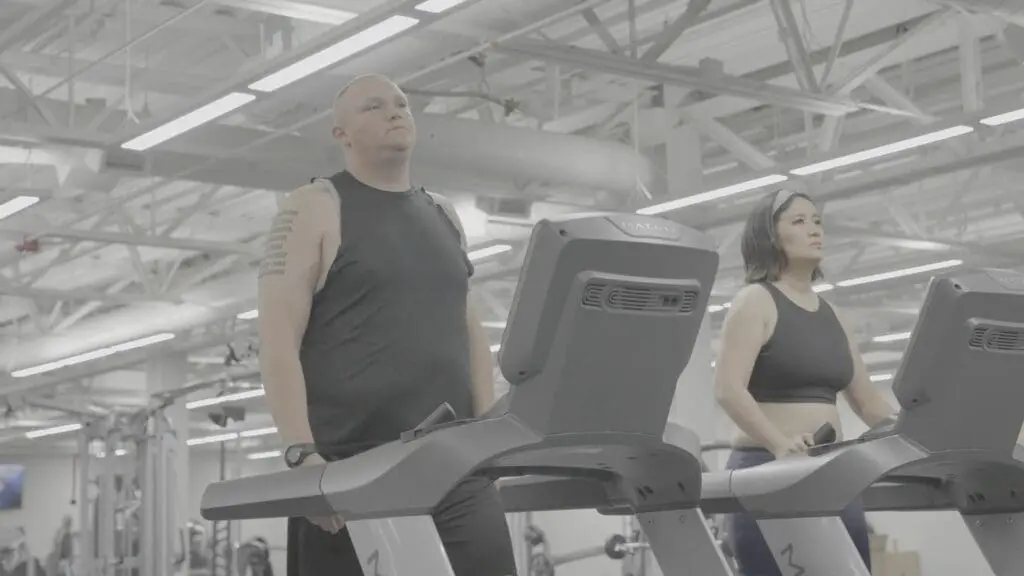
Peloton’s rise and correction told this story at massive scale. The hardware was beautiful. The content was world-class. But when the novelty wore off, engagement dropped — because even the best screen in the world can’t override the fundamental psychological reality that most human brains do not want to do hard physical work for no immediate reward.
This isn’t a willpower problem. It’s an evolutionary one. Our ancestors didn’t need motivation to move — survival handled that. We’re running modern software on ancient hardware, and the ancient hardware keeps saying: “Why are we doing this? Nothing is chasing us. Sit down.”
No amount of equipment innovation solves that.
What Actually Works (And Why the Research Points Toward Games)
Here’s where things get interesting. A growing body of research on exergaming — exercise paired with interactive gaming elements — is converging on a finding that should make every gym owner pay attention:
When you change the psychological experience of exercise, you change the behavior.
Studies consistently show that when people exercise inside game-like environments, they report lower perceived exertion, higher enjoyment, greater intrinsic motivation, and — critically — better long-term adherence.

Some VR exercise studies have even found that participants push themselves harder while simultaneously feeling like they’re working less!
Read that again. They work harder and enjoy it more. That’s not a marginal improvement. That’s a fundamental inversion of the core problem.
And it makes sense when you think about what games actually are. Games are motivation engines. They’re the most sophisticated psychological design systems humans have ever built.
A great game takes a difficult, repetitive task and makes it feel urgent, meaningful, and fun — not by making the task easier, but by wrapping it in a context that gives your brain reasons to care.
Clear goals. Immediate feedback. A sense of progression. Social stakes. Narrative meaning. Variable reward. Identity.
Sound familiar? Those are also the exact ingredients that decades of behavioral science say drive lasting habit formation. Games didn’t stumble into this. Game designers have been solving the motivation problem — at scale, for billions of people — for 40 years.
The fitness industry has been trying to solve it by making the treadmill quieter.
Fitness Is Becoming a Design Problem
Here’s the thesis, stated plainly: the future of fitness belongs to whoever builds the best motivation engine.
Not the best machine. Not the best app. Not the best content library. The best system for making a human brain want to do the hard thing again tomorrow.
That’s a game design problem. It’s a UX problem. It’s a behavioral psychology problem. And it requires thinking about fitness the way Blizzard thinks about World of Warcraft or Supercell thinks about Clash Royale — as a retention design challenge, where every session needs to deliver enough psychological reward to pull someone back for the next one.
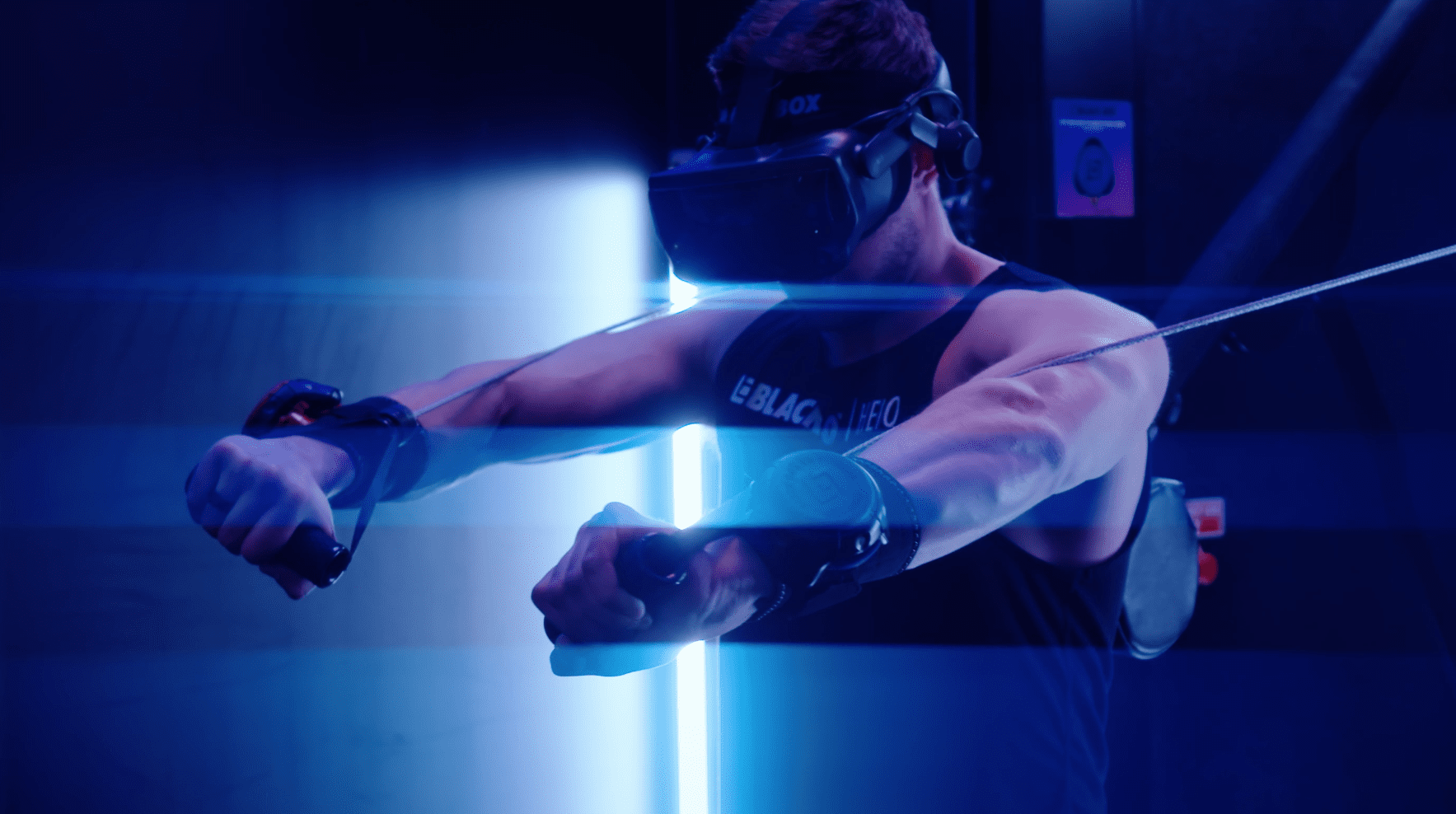
This is why, at Black Box VR, we don’t think of ourselves as a gym company that added VR. We think of ourselves as a game studio that chose exercise as the core mechanic.
That’s not a branding gimmick. It’s a fundamentally different design philosophy. When your starting question is “how do we make the best resistance training equipment?” you end up optimizing for biomechanics. When your starting question is “how do we make someone’s brain crave their next workout?” you end up optimizing for game loops, progression systems, social dynamics, and identity.
Both are valid engineering challenges. But only one of them solves the actual problem.
The Trojan Horse
Here’s the beautiful irony of all of this: the exercise itself doesn’t change. The sets, the reps, the resistance, the progressive overload — all of that stays grounded in exercise science. What changes is the wrapper. The context. The reason your brain assigns to the effort.
We call it the Trojan Horse. The workout is hidden inside the game. You’re not doing a chest press — you’re launching an attack. You’re not completing a set — you’re earning resources to deploy your Champion. You’re not logging another gym session — you’re battling for territory on a another planet.
Your muscles don’t know the difference. But your brain does. And your brain is the one that decides whether you come back tomorrow.
This is what the research keeps confirming: the body follows the mind. If you can get the psychological design right — if you can build a system that makes exercise feel like play — the physical results take care of themselves. Because the hardest part of fitness was never “what exercises should I do?” It was “how do I make myself keep doing them?”
Where This Is Going
We’re at an inflection point. The tools to build truly immersive, psychologically sophisticated exercise experiences — VR, real-time data, adaptive game systems, AI, social platforms — are all maturing at the same time. The research is catching up. The thesis is being validated.
And the competitive landscape is going to shift in a way that most of the industry doesn’t see coming. The winners in the next era of fitness won’t be determined by who has the best cable machine or the most Instagram-friendly studio design. They’ll be determined by who understands motivation design at the deepest level.

The gym of the future looks less like a weight room and more like a game world. And the people building it won’t just have degrees in kinesiology — they’ll have experience shipping games that millions of people couldn’t stop playing.
That’s the bet we’re making at Black Box VR. And every new study that comes out makes us more convinced we’re right.
Your first battle is on me. Book your FREE demo today. It’s time to change the game.

Ryan DeLuca is the CEO and Co-Founder of Black Box VR, the world’s first virtual reality fitness experience. Previously, he founded Bodybuilding.com and grew it to become the most visited fitness site in the world with nearly $500 million in annual revenue before stepping down as CEO in 2015.
Ready to dive in? Let’s make fitness your new favorite game. Welcome to the future – welcome to Black Box VR!
About Black Box VR
Black Box VR is the world’s first virtual reality esport that combines resistance training, HIIT cardio, and intense gaming to deliver a science-backed workout experience. In our luxurious gym locations, members are able to build muscle, lose fat, and get fit while playing an addictive game.
Have questions? Ask MAIA, our AI chatbot!